Kilburn Iii Review: Real User Experience After 3 Months
Introduction
I've been using the Kilburn Iii as my go-to portable speaker for about three months now. I bought it because I wanted a speaker with character — something that could deliver a warm, punchy sound for indoor listening and still hold its own outdoors when friends dropped by. After dozens of listening sessions, walks with the speaker on my shoulder, and a few small parties, I wanted to share an honest, hands-on account of what it's like to live with the Kilburn Iii on a daily basis.
My Setup and Testing Approach
To be clear about how I tested the Kilburn Iii: I used it in a variety of real-world situations rather than only in a lab. That means background music during cooking, focused listening sessions with different genres (acoustic, electronic, jazz, rock), short outdoor gatherings, and moving between rooms in my apartment. I paired it with both my phone via Bluetooth and an older laptop via the 3.5mm input. I listened at different volume levels and tracked battery life by charging only when the speaker was nearly depleted.
Design & Build: What I Liked and What I Noticed
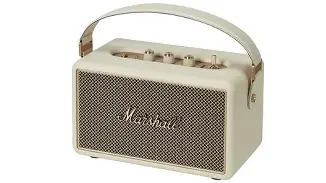
In my experience, the Kilburn Iii has a classic, purposeful look that feels like a modern heir to vintage guitar amps. The textured vinyl covering and the brass-look control knobs give it a tactile, satisfying quality. I noticed right away that Marshall paid attention to small details: the grille pattern, the raised logo, and the metal accents all feel cohesive.
That said, it isn't feather-light. I appreciated the solid weight — it communicates durability — but when I carried it for longer walks I felt the bulk. If you're picturing a pocket-sized speaker you can forget in your bag, this isn't it. For me, the weight was a trade-off I accepted because the construction feels robust and the speaker survived a minor bump on stairs without a scratch.
Controls and Usability
The top-mounted dials are immediately intuitive: volume, bass, treble — classic Marshall. I liked that I could tweak the tone without needing an app. What I found was that these physical knobs make the Kilburn Iii more enjoyable to use than many app-dependent alternatives. However, I did miss having a companion app for firmware updates and more advanced EQ presets. In my experience, the lack of an app is a conscious design choice, not an oversight, but it does limit deeper customization.
Sound Performance: The Heart of the Matter
After testing across genres, here's what I experienced with the Kilburn Iii:
- Low end: The bass is punchy and gratifying for a portable box. When I played bass-heavy electronic tracks, the speaker delivered a satisfying thump without sounding overly bloated at moderate volumes. At max volume the bass can get a little loose depending on the room and surface, but overall it stayed controlled in my living room tests.
- Mids: Vocals and guitars came through warm and forward. I appreciated how intimate acoustic performances sounded; singer-songwriter tracks felt present and textured. Some electric guitars had the richness I expected from Marshall's signature sound.
- Highs: The treble is smooth rather than bright. Cymbals and hi-hats were clear but not piercing, which made long listening sessions comfortable. If you're someone who prefers hyper-detailed top end, you might find it a touch rolled-off, but I personally liked the forgiving top end.
- Imaging and soundstage: For a single-box portable speaker, the Kilburn Iii surprised me with decent stereo width. It doesn't create a huge soundstage, but when positioned centrally it filled my small living space pleasantly. Outdoors, the dispersion is good for groups of 6–8 people sitting nearby.
One thing that bothered me early on was the speaker's tendency to sound more dynamic and alive at certain volume ranges. At very low volumes some tracks lost a bit of their texture, which is common for many portable speakers but noticeable if you do a lot of soft listening.
Battery Life & Charging
My real-world battery experience: with mixed usage (a few hours at moderate volume, occasional loud moments), I consistently got around 10–12 hours before the battery dropped into the red. When I pushed it constantly at high volumes outdoors, that number dropped to the 6–7 hour range. Those numbers matched my expectations for a speaker of this size: substantial for a day out, not the multi-day endurance of ultra-portable battery beasts.
Charging felt reasonable — not lightning-fast, but not glacial either. From near-empty to mostly full took a few hours. I did notice that frequent top-up charging seemed to be fine; after three months, battery capacity still felt consistent with my early experiences. If you plan to rely on this for long outdoor events, consider bringing a power bank or accepting mid-day charging.
Shop the latest Audio & Headphones picks on Amazon.
Browse Now →Connectivity & Features
Bluetooth pairing was effortless in daily use. My phone reconnected quickly when in range, and I experienced very few dropouts indoors. The Kilburn Iii also provided a physical 3.5mm input which came in handy for older laptops and when I wanted a wired connection that avoided Bluetooth compression.
What I missed were some modern conveniences: multi-device simultaneous playback, a dedicated app for updates and EQ, and advanced codecs like aptX Adaptive. That didn't break the experience for me, but if you want the latest wireless bells and whistles, it's something to consider.
Durability & Portability in Real Life
After carrying this speaker between rooms, on short hikes, and to small get-togethers, I found it durable. The surface shows minimal marks despite being tossed into my trunk and set on picnic benches. I did keep it out of heavy rain — it's not marketed as a fully waterproof device — and I wouldn't intentionally expose it to harsh weather. For backyard use, it handled light dew and splashes fine when placed under cover.
Portability is a mixed bag: it's portable in that you can pick it up and take it with you, but it's not a pocketable speaker. For me, the weight and size were acceptable trade-offs for better sound. If you frequently travel with hand-luggage limits or need a truly pocketable option, this won't be the best choice.
Everyday Use: Where It Shines and Where It Struggles
My favorite uses for the Kilburn Iii were: background music during cooking, weekend afternoons on the balcony, and small house gatherings where people congregate in one space. I noticed that even casual listeners commented on the sound — "this sounds bigger than I expected" — which I took as a compliment to the speaker's presence.
Conversely, the Kilburn Iii struggled a little in very large or noisy outdoor settings. When competing with multiple people talking and traffic noise, you need to crank it near maximum, and at that point the speaker's clarity and balance degrade slightly. It's great for intimate or mid-sized situations, less suited to being the main sound source at a busy park party.
Pros & Cons
- Pros:
- Warm, punchy signature sound that suits rock, acoustic, and vocals
- Classic, tactile design with satisfying physical controls
- Solid build quality and a reassuring weight
- Good battery life for day use (10–12 hours in my real-world tests)
- 3.5mm input for wired use and reliable Bluetooth pairing
- Cons:
- Heavier and bulkier than ultra-portable alternatives
- No companion app or advanced wireless codecs (limits customization)
- Not fully waterproof — I'd avoid heavy rain
- High-volume outdoor performance can lose clarity in very noisy settings
- Some loss of detail at very low listening volumes
Comparison Table
| Model | Weight / Portability | Battery (real-world) | Sound Signature | Notable Strength | Best For |
|---|---|---|---|---|---|
| Kilburn Iii | Medium-heavy — sturdy but not pocketable | ~10–12 hours (moderate volumes) | Warm, punchy bass, forward mids, smooth highs | Tonal character and tactile controls | Home listening, small gatherings, outdoor day use |
| Kilburn II (previous gen) | Similar weight, slightly less refined controls | Comparable in real-world use | Similar tonal balance, slightly less refined lows | Classic Marshall sound at a lower cost | Fans of vintage Marshall style on a budget |
| Portable Party Speaker (example competitor) | Lighter or heavier depending on model | Can exceed 20+ hours (if designed for partying) | Often brighter, bass-boosted tuning | Long battery and party features | Large outdoor events, long days away from power |
Buying Guide: Is the Kilburn Iii Right for You?
In my experience, deciding whether to buy the Kilburn Iii comes down to your priorities. Here are a few practical questions I asked myself and the answers I would give based on living with the speaker for three months.
Do you prioritize sound character over features?
If you prefer a speaker with a distinct tonal character and tactile controls instead of a platform packed with app-driven features, the Kilburn Iii is an excellent match. I noticed that the absence of an app actually made daily use simpler: no fiddling through menus, just twist the knobs and listen.
Discover deals on Audio & Headphones — updated daily.
View Offers →Will you need a lightweight, pocketable speaker?
Then this isn't the right choice. I noticed the Kilburn Iii is most rewarding when you accept its physical presence. If portability for long hikes or commuting is essential, look for something smaller.
Do you want long, multi-day battery life?
The Kilburn Iii performed well for typical day trips, but if you need 24+ hour endurance without charging, consider alternatives designed for marathon battery life. In my testing, the battery life was solid but not class-leading.
How important is weather resistance?
I treat the Kilburn Iii as splash-resistant at best. For beach days or unpredictable weather, I'd take a fully waterproof model. I noticed that while it handled light moisture, I avoided heavy rain to be safe.
Practical checklist before buying
- Think about where you'll use it most: indoors, balcony, backyard, or on long outdoor trips.
- Decide if physical knobs and a tactile interface matter to you versus app control.
- Consider carrying weight — try to lift a similar-sized speaker in-store to feel the difference.
- Ask how important advanced Bluetooth codecs or multi-device features are for your devices.
- Factor in battery expectations and whether you need a speaker that lasts days without charging.
Final Thoughts and Conclusion
After three months with the Kilburn Iii, what I found was a speaker that delivers character first and feature lists second. In my experience, it excels at giving music a pleasant, musical edge: warm lows, satisfying mids, and a treble response that keeps listening fatigue low. The build and controls feel intentionally designed, and the battery life is trustworthy for typical day use.
My disappointments were mostly around modern conveniences — no app, no advanced wireless codecs, and the physical size if portability is a top priority. Those are worth noting, but they didn't outweigh the enjoyment I got from the sound and the way the speaker fit into daily life.
If you want a portable speaker that feels like a proper piece of audio equipment rather than a disposable gadget, the Kilburn Iii is a rewarding pick. It's not the perfect speaker for every scenario, but for cozy listening sessions, small gatherings, and anyone who prefers tactile controls and a warm, analog-leaning sound, it has a lot to offer. In my case, it's become the speaker I reach for when I want music that feels like an event rather than background noise.