Don't Buy Until You Read This: Akaso 360 vs Nisi V7 Filter Kit
In the rapidly evolving world of digital photography and videography, the tools we use to capture light can be as critical as the sensors that record them. However, occasionally, comparisons arise between products that inhabit entirely different realms of the creative workflow. Such is the case when examining the Akaso 360 and the NiSi V7 Filter Kit. While one is a sophisticated piece of digital imaging hardware—a camera designed for immersive 360-degree capture—the other is an optical refinement system intended for high-end landscape and architectural photography. This analysis explores whether your investment should go toward a new way of seeing the world in 360 degrees or a system designed to perfect the light entering your existing glass.
The Akaso 360: Immersive Storytelling Redefined
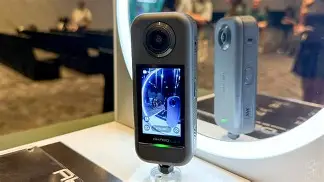
The Akaso 360 represents a shift toward democratization in the spherical imaging market. 360-degree cameras were once the exclusive domain of high-budget virtual reality studios or niche extreme sports enthusiasts. Today, cameras like the Akaso 360 allow content creators to capture every angle of a scene simultaneously, effectively allowing them to "shoot first and point later" during the editing process.
At its core, the Akaso 360 utilizes dual wide-angle lenses positioned back-to-back. Each lens captures a hemisphere of visual data, which internal software or companion mobile apps then "stitch" together into a seamless equirectangular image. This technology is particularly valuable for travelers and action sports athletes. Instead of worrying about framing a shot while flying down a mountain on a mountain bike or exploring a crowded marketplace, the user can simply hit record. In post-production, they can choose to export a traditional flat video by keyframing the "camera" movement within the 360-degree sphere, or they can upload the full immersive experience to platforms that support VR playback.
However, the Akaso 360 is not without its challenges. Because the total resolution is spread across a full 360-degree view, the pixel density in any single "flat" view is lower than what one might expect from a dedicated 4K standard action camera. Furthermore, stitching lines—the area where the two lens views meet—can sometimes be visible if objects are too close to the camera body. Despite these hardware limitations, the creative freedom offered by not having a viewfinder is a paradigm shift for many creators.
Pros and Cons of the Akaso 360
- Pros: Full 360-degree field of view ensures no moment is missed in any direction.
- Pros: Compact and rugged design makes it suitable for mounting on helmets, handlebars, or extension poles.
- Pros: Re-framing capabilities in post-production allow for dynamic camera movements that are impossible with traditional cameras.
- Pros: Excellent for social media creators looking to produce unique "tiny planet" perspectives.
- Cons: Lower effective resolution when cropped into a standard 16:9 frame compared to traditional cameras.
- Cons: Image quality can suffer in low-light environments due to relatively small image sensors.
- Cons: Requires a more intensive post-production workflow involving specialized stitching and editing software.
The NiSi V7 Filter Kit: Mastering the Art of Long Exposure
On the opposite end of the photographic spectrum lies the NiSi V7 Filter Kit. This is not a camera, but rather a professional-grade square filter system designed to sit in front of high-end lenses. For the landscape photographer, a filter kit is often more important than a camera upgrade. While the Akaso 360 is about capturing everything at once, the NiSi V7 is about slowing down and refining the specific quality of light reaching a sensor.
The V7 is the latest evolution of NiSi's acclaimed filter holder systems. It features a streamlined design that allows for the simultaneous use of a circular polarizer and up to three square filters without vignetting, even on wide-angle lenses as wide as 16mm on a full-frame sensor. The hallmark of the V7 kit is its "True Color" NC Circular Polarizer (CPL). Traditional polarizers often introduce a slight yellow or warm cast to the image; the V7 CPL is engineered to maintain perfect color neutrality while effectively removing reflections from water and foliage or deepening the blue of the sky.
The kit typically includes Neutral Density (ND) filters and Graduated Neutral Density (GND) filters. These are essential for managing high-contrast scenes. For instance, when photographing a sunset, the sky is significantly brighter than the foreground. A GND filter allows the photographer to darken the sky without affecting the foreground, maintaining detail across the entire dynamic range. ND filters, on the other hand, allow for long exposures in broad daylight, turning crashing waves into a soft mist or moving clouds into streaks of motion. This is a level of physical light manipulation that software still struggles to replicate convincingly.
Find top-rated Cameras & Photography products at great prices.
Browse Now →Pros and Cons of the NiSi V7 Filter Kit
- Pros: Exceptonal optical quality with minimal color cast, preserving the integrity of high-end lens glass.
- Pros: Features a clever rotation wheel for the CPL, allowing for easy adjustment even when square filters are installed.
- Pros: Compatibility with a wide range of lens diameters through included adapter rings (67mm, 72mm, 77mm, and 82mm).
- Pros: Durable construction using aviation-grade aluminum and high-quality optical glass.
- Cons: A significant investment for an accessory that does not include the camera or lens itself.
- Cons: Square filters are fragile and require careful handling and cleaning in the field.
- Cons: Adds bulk and weight to a camera bag, requiring a dedicated pouch or case.
Comparing Utility and Technical Specifications
To understand which of these products fits into a photographer's gear bag, it is helpful to look at how they compare in terms of their intended application and technical requirements. While they are fundamentally different tools, they both represent "premium" choices in their respective categories.
| Feature | Akaso 360 | NiSi V7 Filter Kit |
|---|---|---|
| Primary Use | Action, VR, Immersive Travel | Landscape, Architectural, Long Exposure |
| Input Required | Battery power, MicroSD card | Existing DSLR/Mirrorless camera and lens |
| Material | Polycarbonate and glass lenses | Aviation aluminum and Optical glass |
| Portability | Pocket-sized, self-contained | Requires dedicated carry case for filters |
| Editing Difficulty | High (requires stitching/reframing) | Low to Medium (aimed at "in-camera" results) |
| Weather Resistance | Usually rugged/waterproof-rated | Resistant to elements, but glass requires wiping |
Real-World Use Cases: Which One Do You Actually Need?
Choosing between an Akaso 360 and a NiSi V7 Filter Kit often comes down to the style of content you wish to produce. Let us consider two distinct types of creators to illustrate the choice.
The Adventure Content Creator
If you find yourself skiing, scuba diving, or vlogging in busy urban environments, the Akaso 360 is almost certainly the better investment. In these scenarios, the goal is to capture the "vibe" and the entirety of an experience. You aren't necessarily looking for a single, perfectly balanced still frame to print large on a gallery wall. Instead, you want the ability to show your audience what it felt like to stand in the center of the action. The 360 camera acts as an insurance policy against bad framing; even if you weren't looking at the camera when something interesting happened, the camera was looking at it.
The Fine-Art Landscape Photographer
If your Saturday mornings involve hiking to a coastline at 5:00 AM to wait for the perfect light, the NiSi V7 is the superior choice. A 360 camera will provide poor dynamic range and mediocre sharpness in the high-contrast light of a sunrise. The NiSi V7, however, gives you the tactile control needed to balance the exposure in-camera. By using a 6-stop or 10-stop ND filter, you can create ethereal, high-art images that define professional landscape portfolios. For this photographer, the "360-degree" view is irrelevant; what matters is the 24mm or 35mm frame they have carefully composed, and the V7 ensures that frame is optically perfect.
Buying Guide: Key Considerations Before Purchase
Before committing your budget to either the Akaso 360 or the NiSi V7 system, consider the following technical and practical factors:
1. Understanding Your Output
Where will your work live? If you primarily share to TikTok, Instagram, or YouTube, the flexibility of the Akaso 360 is a massive advantage. If you are building a professional portfolio, selling prints, or entering photography competitions, the optical precision of the NiSi V7 will yield results that stand up to close scrutiny.
2. The Cost of the Ecosystem
The purchase price is rarely the final cost. For the Akaso 360, you may need a powerful smartphone or computer to handle the 360-degree video files, along with extra batteries and "invisible" selfie sticks. For the NiSi V7, the kit is often just the beginning. You may eventually want to add specialized filters like a "Natural Night" filter for astrophotography or different strengths of Graduated NDs. Ensure you have the additional budget for these ecosystem accessories.
Discover deals on Cameras & Photography — updated daily.
Shop Amazon →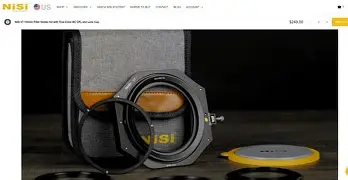
3. Handling and Durability
The Akaso 360 is built for abuse. It can generally handle drops, splashes, and dust. The NiSi V7 filters are made of optical glass. If you drop a square filter on a rock, it will likely shatter. If you are someone who operates in precarious or messy environments without time for methodical setup, the fragility of a glass filter system may be a source of constant stress.
4. Software vs. Hardware Solutions
Modern mirrorless cameras have incredible dynamic range, and some photographers argue that "bracketing" (taking multiple exposures and merging them in Lightroom) makes Graduated ND filters obsolete. While this is true for some scenes, a physical filter like those in the NiSi V7 kit still handles moving water, polarizing effects, and extreme long exposures better than any software-based "stacking" method. Conversely, there is no software that can turn a standard camera into a 360-degree camera; that is a hardware-exclusive capability.
Conclusion
When deciding between the Akaso 360 and the NiSi V7 Filter Kit, you are essentially choosing between two different philosophies of image-making. The Akaso 360 is a tool for the documentarian and the adventurer, offering a high-tech solution to the problem of missing the shot. It prioritizes coverage, immersion, and ease of use in dynamic environments over raw per-pixel image quality.
The NiSi V7 Filter Kit is a tool for the artist and the perfectionist. It is a low-tech but high-precision solution to the problem of unruly light. It doesn't capture more of the world; it captures the world better. By slowing down the photographic process, it encourages a more thoughtful and deliberate style of shooting that results in polished, professional-grade imagery.
Ultimately, the "best" buy depends on the gaps in your current kit. If you already have a high-quality mirrorless camera but find your landscape shots look "flat" or your skies are always "blown out," the NiSi V7 will transform your work. If you find your current photography feels stagnant and you want a fun, fresh way to document your life or create viral content, the Akaso 360 will open up a literal new dimension of creativity. Both products are leaders in their fields, but only one will match the specific way you want to tell your story through the lens.