Don't Buy the Kd900X Ld Plus Running Shoe Until You Read This Full Analysis
The intersection of athletic performance and high-end electronics has never been more crowded than it is today. As wearable technology moves from the wrist to the very soles of our feet, the release of the Kd900X Ld Plus has sparked a significant conversation among marathoners, data enthusiasts, and tech-focused runners. At first glance, this footwear appears to be a standard high-performance carbon-plated racer, but beneath its sleek exterior lies a sophisticated integration of mechanical engineering and embedded sensor technology. For those looking to invest in their next pair of long-distance shoes, understanding whether the Kd900X Ld Plus is a revolutionary leap or a redundant accessory is essential before making a financial commitment.
The "Ld" in the name stands for Long Distance, signaling that this shoe is specifically tuned for the rigors of the marathon and beyond. However, the "Plus" designation reflects the electronic enhancements and refined material stack that differentiate it from its predecessor. In an era where "super shoes" are defined by their foam and plates, the Kd900X Ld Plus attempts to redefine the category by offering real-time feedback and durable performance metrics. This analysis explores every facet of the shoe, from its physical construction to its digital ecosystem, providing a comprehensive guide for anyone considering this substantial addition to their gear rotation.
The Evolution of Smart Footwear Architecture
Historically, smart shoes have struggled to find a balance between the weight of internal electronics and the necessity of lightweight performance. Early attempts often felt clunky or suffered from sensor failure due to the repetitive impact of running. The Kd900X Ld Plus addresses these legacy issues by utilizing a modular electronic core embedded within the Pebax-based midsole. This core is designed to be virtually weightless, ensuring that the shoe maintains the competitive edge required for elite racing while providing the analytical depth usually reserved for laboratory environments.
The primary innovation here is the Dynamic Gait Analysis System (DGAS). Unlike a GPS watch that calculates stride length based on satellite data and wrist movement, the sensors within the Kd900X Ld Plus measure the actual force and angle of foot strike. This provides a granular level of detail that covers pronation, ground contact time, and flight time. For the serious runner, this information isn't just trivia; it is a vital tool for injury prevention and efficiency optimization. By analyzing how a runner’s form degrades over a two-hour period, the system can provide warnings or suggestions for form correction, essentially acting as a digital coach embedded in the shoe.
Midsole Composition and Mechanical Advantage
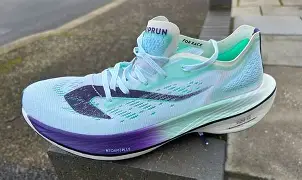
While the electronics provide the brains, the foam and plate provide the brawn. The Kd900X Ld Plus features a dual-density V-Pebax foam stack. The top layer is softer for immediate comfort and impact absorption, while the lower layer is firmer to provide stability and protect the electronic housing. Sandwiched between these layers is a full-length, articulated carbon fiber plate. This plate is not a static piece of material; it is engineered with varying stiffness zones to mimic the natural movement of the human metatarsals while providing the "spring" effect that has become the hallmark of modern racing shoes.
The integration of the plate and the electronics is seamless. The sensors are positioned just above the plate, allowing them to measure the energy return of the foam and the deflection of the carbon fiber in real-time. This allows runners to see exactly how much "pop" they are getting from their footwear at different speeds. It also provides an honest look at the lifespan of the shoe. One of the biggest complaints in the super-shoe category is that the foam loses its resilience after a few hundred kilometers. The Kd900X Ld Plus explicitly tracks this degradation, notifying the user when the mechanical properties of the foam have dropped below the optimal performance threshold.
Technical Specifications and Connectivity
From an electronics perspective, the Kd900X Ld Plus is more than a passive peripheral. It utilizes Bluetooth 5.2 for low-energy data transmission to smartphones and compatible sports watches. The internal battery is designed to last approximately 500 kilometers of active use, which aligns perfectly with the expected performance life of the midsole foam. Charging is handled through a discreet induction point on the heel, eliminating the need for ports that could be compromised by water, mud, or sweat.
The data processing happens on-board before being synced, which means you don't need to have your phone with you to capture your metrics. The shoe can store up to 20 hours of running data internally. Once synced, the companion application provides a heat map of your foot strike, a breakdown of your power output in watts (a metric increasingly popular in the running community), and a "fatigue index" that correlates your gait changes with your heart rate data from external sensors. This holistic view of performance is what elevates the shoe from a simple piece of clothing to a sophisticated diagnostic tool.
Looking for the best Electronics deals on Amazon?
View Offers →Real-World Use Cases: Training vs. Racing
One of the most common questions regarding the Kd900X Ld Plus is whether it should be used for daily training or saved for race day. Given the price point and the specialized nature of the carbon plate, it is definitively a race-day shoe. However, the electronics offer a compelling argument for using them during key "marathon pace" workouts. By using the shoe during a long training run, a runner can identify exactly where their form begins to fail. For example, if your ground contact time increases significantly after mile 18, it may indicate a need for more strength training in the glutes or calves.
In a race environment, the shoe provides a psychological and physical edge. The aggressive rocker geometry encourages a forward-leaning posture, while the lightweight mesh upper ensures maximum breathability. The electronic feedback during the race can be set to alert your watch if your cadence drops below a certain threshold, helping you maintain your rhythm when the inevitable "wall" hits in the final stages of a 42.2km effort.
Detailed Feature Analysis: Pros and Cons
Every piece of technology involves trade-offs. The Kd900X Ld Plus is no exception. While it offers unprecedented insights, the complexity of its design introduces new considerations for the consumer.
- Unrivaled Data Accuracy: By measuring at the source (the foot), the gait metrics are far more accurate than those estimated by wrist-based accelerometers.
- Proactive Injury Prevention: The ability to track pronation shifts and impact force in real-time allows runners to adjust their form before a "niggle" becomes a full-blown injury.
- Superior Energy Return: The combination of V-Pebax foam and the articulated carbon plate provides a high-rebound feel that reduces leg fatigue during long efforts.
- Foam Longevity Tracking: The "Smart Life" feature takes the guesswork out of when to retire your shoes, ensuring you are never racing in "dead" foam.
- Simplified Connectivity: Automatic syncing and long battery life make the electronic aspect of the shoe unobtrusive and user-friendly.
- Initial Cost vs. Lifespan: While the data is great, the physical shoe still has a limited lifespan (approx. 500-600km), making the cost-per-kilometer quite high compared to non-electronic trainers.
- Rigid Feel: Like most carbon-plated shoes, it can feel awkward and unstable at walking speeds or during slow recovery jogs; it is designed to move fast.
- App Dependency: To get the most out of the "Plus" features, you are tied to a specific app ecosystem, which may not sync perfectly with every third-party fitness platform.
- Weather Sensitivity: Although the electronics are sealed, extreme cold can affect battery life, and very deep water submersion is still a risk for long-term sensor health.
- Weight Penalty: While minimal, the inclusion of sensors and a battery adds a few grams compared to "stripped-back" elite racing flats that forgo all technology for the sake of lightness.
Comparison with Leading Alternatives
To understand where the Kd900X Ld Plus sits in the current market, it is helpful to compare its technical and physical attributes with other prominent models in the "super shoe" and "smart shoe" categories. The following table highlights the key differences that buyers should consider.
| Feature | Kd900X Ld Plus | Standard Carbon Racer | Integrated Smart Trainer |
|---|---|---|---|
| Midsole Material | Dual-Density V-Pebax | Single-Density PEBA | EVA or TPU Blend |
| Sensor Type | 6-Axis Motion + Force | None | Basic Accelerometer |
| Analytics Depth | Power, Impact, Form Deg | None (Watch required) | Steps, Distance, Cadence |
| Weight (Men's US 9) | 225g | 195g - 210g | 280g - 310g |
| Primary Purpose | Long Distance Race/Analysis | Elite Racing | Daily Fitness Tracking |
| Durability Tracking | Digital Sensor Feedback | Manual Log | Manual Log |
Buying Guide: Is This Shoe Right for You?
Purchasing the Kd900X Ld Plus is a decision that should be based on your specific goals as a runner. It is not a "one size fits all" solution for the casual jogger. Instead, it is a precision instrument designed for individuals who view running as a measurable science. When evaluating this shoe, consider the following factors to ensure it aligns with your training philosophy.
1. Assess Your Data Needs
If you find yourself constantly analyzing your splits, heart rate variability, and training load, the Kd900X Ld Plus will feel like a natural extension of your toolkit. However, if you prefer "running by feel" and find technology distracting, the added cost of the electronic components will likely be a waste. The value of this shoe lies entirely in how you use the data it generates.
2. Consider Your Stride and Form
The aggressive geometry of the Kd900X Ld Plus is optimized for midfoot and forefoot strikers. While the foam provides ample cushioning for heel strikers, the carbon plate and rocker are designed to propel you forward from the midfoot. If you have a very heavy heel strike or significant stability issues, you may find the shoe's high stack height and narrow heel platform a bit unstable during cornering or on uneven terrain.
Find top-rated Electronics products at great prices.
See Deals →3. Evaluate the "Price-to-Analysis" Ratio
You aren't just buying a pair of shoes; you are buying a 500-kilometer subscription to a gait lab. When calculating the value, think about what you would spend on a professional gait analysis or a private coach. If the insights provided by the shoe help you avoid even one physical therapy session by correcting an injury-prone habit, the shoe effectively pays for itself. Conversely, if you only care about the cushioning, there are cheaper non-electronic alternatives available.
4. Connectivity and Ecosystem
Check the compatibility of your current devices. While the Kd900X Ld Plus uses standard Bluetooth protocols, the full suite of "Plus" metrics is often best viewed through the proprietary software. Ensure your smartphone is capable of running the latest version of the app and that you are comfortable with the data privacy policies associated with cloud-based athletic tracking.
The Impact of the "Plus" System on Long-Term Training
One often overlooked aspect of the Kd900X Ld Plus is how it changes the "off-season." During periods of high-volume training, the fatigue index becomes a critical metric. Many runners overtrain because they ignore the subtle signs of exhaustion. The shoe’s electronics can detect a "sloppy" foot strike—where the foot stays on the ground a few milliseconds longer than usual—even if the runner feels okay. This objective data allows for a more nuanced approach to recovery, suggesting a rest day before the body forced one through injury.
Furthermore, the shoe encourages a more thoughtful relationship with gear. By seeing the actual degradation of the foam in the app, runners become more aware of the mechanical realities of their footwear. This leads to better habits, such as rotating shoes to allow foam to decompress and ensuring that race-day equipment is always in peak condition. The Kd900X Ld Plus isn't just about the miles you run today; it’s about ensuring you can continue to run those miles for years to come.
Conclusion
The Kd900X Ld Plus is a bold statement in the world of specialized electronics and athletic performance. It successfully bridges the gap between a high-performance carbon-plated racer and a sophisticated data-gathering device. While the price and specialized nature of the shoe make it a niche product, its ability to provide real-time, actionable insights into gait, impact, and foam health is undeniably impressive. It challenges the runner to not just work harder, but to work smarter by using objective data to guide their progress.
For the competitive marathoner or the tech-forward athlete who wants to deconstruct their performance down to the millisecond, the Kd900X Ld Plus provides a level of detail that was previously inaccessible outside of a sports science laboratory. However, potential buyers must weigh this analytical power against the inherent limitations of "super shoe" durability and the need for a compatible digital ecosystem. If you are ready to embrace a data-driven approach to your long-distance goals, this shoe offers a glimpse into the future of running. If you simply want a comfortable pair of sneakers for the occasional weekend jog, you may be better served by a traditional trainer, leaving the Kd900X Ld Plus to the specialists for whom every percentage point of efficiency counts.