Blind Test: Netgear Nighthawk M7 5G Router vs Hp Omnibook 7 14 Inch 2025 - Which is Actually Better?
Introduction
In a world where constant connectivity and mobility converge, buyers often weigh two very different types of devices against one another: dedicated networking hardware and thin-and-light laptops. The Netgear Nighthawk M7 5G Router and the HP Omnibook 7 14 Inch 2025 represent these two approaches. One promises multi-device internet access wherever 5G reaches, the other brings a full computing platform with built-in radios and a portable screen. This blind test compares them in practical, buyer-focused terms: everyday performance, portability, battery life, real-world use cases, and the trade-offs buyers should understand before choosing.
How this blind test works
This article focuses on how each product performs in real user scenarios rather than on spec-sheet showdowns. It considers typical buyer priorities—reliability, speed, battery life, ease of setup, compatibility with existing devices, and cost of ownership—and evaluates how the Nighthawk M7 and the HP Omnibook 7 address those priorities. Where capabilities depend on configuration or network conditions, that nuance is explained so readers can map the results to their own needs.
Netgear Nighthawk M7 5G Router — Detailed review
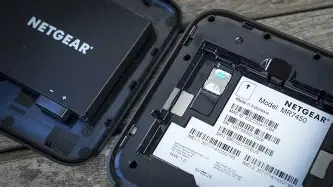
The Netgear Nighthawk M7 is a dedicated portable 5G router designed to deliver high-speed internet to multiple devices via a local Wi‑Fi network. It is built for people who need a stable, sharable internet connection outside of a fixed broadband link—think frequent travelers, remote workers in temporary locations, or small teams at pop-up events.
Real-world performance and usability
In everyday use, the M7's strengths are straightforward: it centralizes a cellular 5G connection and hands it out to phones, laptops, tablets, and smart devices. Setup is typically quick—insert a compatible SIM, power on, and connect to the Wi‑Fi network. Administrative tasks such as network naming, password changes, and data monitoring are handled through a companion web interface or app, giving basic but adequate management options for most users.
Performance varies with carrier coverage and network load. In strong 5G areas the M7 will reliably provide faster download and upload speeds than most 4G hotspots, and its ability to support many simultaneous clients (often a dozen or more) makes it suitable for group scenarios. However, performance will fall back to 4G in areas where 5G coverage is absent or constrained.
Portability, battery, and build
The M7 is purpose-built to be portable: compact, reasonably light, and often with a built-in battery for several hours of untethered operation. This makes it useful for commuting, short fieldwork sessions, and any situation where plugging into wall power is inconvenient. The build is generally practical with durable plastics and ventilation designed around continuous wireless use.
Management and security
Netgear provides firmware updates and common security features such as WPA3 (where supported), guest networks, and basic firewalling. For users with more advanced needs—VPN passthrough, enterprise-grade authentication, or fine-grained QoS—limitations may appear depending on firmware and carrier restrictions. Regular firmware updates and strong password hygiene are recommended to keep the device secure.
Who is the M7 for?
- Users who need fast mobile internet for multiple devices in transit.
- Small teams working at temporary locations, pop-up shops, or events.
- Travelers who rely on cellular connectivity where hotel or venue Wi‑Fi is unreliable.
Pros & Cons — Netgear Nighthawk M7
- Pros: Dedicated multi-device 5G sharing; portable battery-powered design; simple setup and management; consistent coverage when 5G is available.
- Cons: Performance depends on carrier coverage and plan limits; fewer advanced networking controls compared with enterprise gear; extra device to carry and manage (separate from a laptop).
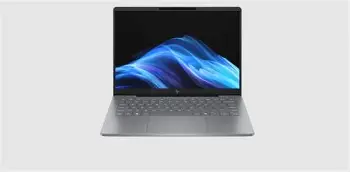
HP Omnibook 7 14 Inch 2025 — Detailed review
The HP Omnibook 7 14 Inch 2025 is a thin-and-light laptop aimed at productivity-focused buyers who want a balance of portability, battery life, and screen real estate. It integrates computing, display, and wireless connectivity into a single package—usually available with different CPU, RAM, and storage choices to match varied budgets and workloads.
Looking for the best Laptops & Computers deals on Amazon?
Shop Amazon →Real-world performance and usability
In everyday workflows such as web browsing, office productivity apps, email, light photo editing, and video streaming, the Omnibook 7 delivers a familiar laptop experience. Where the Omnibook stands out is in being an all-in-one device: users don't need a separate hotspot to get online if the chosen configuration includes cellular connectivity (some configurations may include optional 4G/5G modules). For those who depend on heavier tasks—large spreadsheets, software development, or local video editing—the performance depends heavily on the selected CPU and cooling capability.
Portability, battery, and build
A 14‑inch chassis typically balances screen size and portability. The Omnibook 7 is designed to be carried comfortably throughout the day without being as small as an 11‑inch netbook or as large as a 15‑inch workstation. Battery life in real-world usage tends to favor all-day office-style workloads when power settings are tuned; streaming, gaming, or high CPU loads will reduce run time.
Connectivity and expandability
Laptops usually provide a mix of ports—USB‑A, USB‑C with DisplayPort/charge capabilities, HDMI or USB‑C DisplayPort output, and a headphone jack. The Omnibook 7's I/O supports common peripherals; an SD card slot or microSD is sometimes included on 14‑inch models, which benefits content creators. If cellular is important, it's essential to confirm whether the chosen Omnibook configuration includes a WWAN module and whether the laptop supports the bands used by the buyer’s carrier.
Who is the Omnibook 7 for?
- Professionals and students who want a single device for productivity, communication, and media.
- Buyers who prefer integrated hardware (no separate hotspot) and a conventional laptop workflow.
- People who value a good keyboard, trackpad, and a bright, color-accurate screen for day-to-day tasks.
Pros & Cons — HP Omnibook 7 14 Inch 2025
- Pros: All-in-one productivity device; range of configurations for CPU, RAM, and storage; familiar laptop ergonomics and I/O; potential for optional cellular connectivity in some SKUs.
- Cons: If cellular is not included, a separate hotspot or tethering is required for mobile internet; thermal and sustained performance depend on configuration; replacements or upgrades are more involved than swapping a hotspot battery.
Side-by-side comparison
The following table highlights how each device stacks up across the factors most buyers care about.
| Category | Netgear Nighthawk M7 5G Router | HP Omnibook 7 14 Inch 2025 |
|---|---|---|
| Primary purpose | Providing a shared 5G internet connection to multiple devices | Portable personal computing (productivity, media, development) |
| Connectivity | Cellular-first (5G/4G), Wi‑Fi hotspot to clients | Wi‑Fi + Ethernet (if present) and optional WWAN in some models |
| Portability | Very portable; pocketable carrier-style device with battery | Portable laptop; carried in bag; larger footprint |
| Battery life | Hours of off-grid hotspot use depending on load | All-day for light tasks; varies by configuration and screen brightness |
| Multi-device support | Designed for many simultaneous clients | Can tether devices or share via Wi‑Fi if cellular present, but not optimized for many concurrent clients |
| Performance variance | Highly dependent on cellular signal and carrier plan | Depends on CPU/RAM/storage selection and thermal capability |
| Management & security | Hotspot-oriented controls; firmware-based security features | Full laptop OS security stack; corporate management possible via MDM |
| Use-case fit | Better for group connectivity, mobile offices, and events | Better for document work, content creation, and general computing |
| Upgradeability | Limited to firmware and SIM plan | Possible RAM/SSD upgrades depending on model; OS and software updates |
Practical use cases — which device wins in which scenario?
Consider everyday buyer scenarios to decide which device is actually better for a particular need.
1. Remote worker who needs internet for a laptop and phone while commuting
If the remote worker needs to connect multiple devices reliably while moving between locations, the Nighthawk M7 often provides a better experience: a single, managed connection shared between devices without draining the laptop battery. The Omnibook 7 is still useful if it includes a WWAN module, but if not, tethering will reduce laptop battery life and may be less convenient.
2. Student who needs a laptop for classes and occasional on-campus hotspot use
For students, the Omnibook 7 is usually the better choice. It provides a full laptop environment for writing papers, attending classes, and running standard apps. Campus Wi‑Fi or personal phone tethering can cover occasional internet needs. Carrying an extra hotspot is only warranted if the student frequently experiences poor campus Wi‑Fi or needs a separate network for many devices.
Looking for the best Laptops & Computers deals on Amazon?
Shop Amazon →3. Small team running a pop-up event with payment terminals and tablets
In a pop-up retail or event context where multiple devices must be online simultaneously, the Nighthawk M7 is preferable. Its purpose-built design for multi-client internet sharing and portability makes it an efficient, easy-to-manage hub for POS systems, tablets, and laptops.
4. Traveler who needs long battery life and a full computing platform
Travelers who need to do real work — editing documents, joining video calls, or handling multitasking — will find the Omnibook 7 more suitable as their primary device. A separate Nighthawk M7 could complement it for extended trips through areas with spotty Wi‑Fi, but the laptop remains the central productivity tool.
Buying guide — key questions to ask before choosing
To decide between the Netgear Nighthawk M7 and the HP Omnibook 7, buyers should ask a few practical questions. The answers will reveal which device aligns with priorities and lifestyle.
- Do you need to share internet with multiple devices often? If yes, a dedicated 5G router is designed for that role and simplifies connections for many users and devices.
- Is having an all-in-one computing device more important than separate networking hardware? If a single device must cover both productivity and connectivity, a laptop (preferably with optional WWAN) is the natural choice.
- How important is battery life for untethered use? The Nighthawk M7 typically offers several hours of hotspot use independent of a laptop, while laptops aim for longer single-device operation but have different power demands depending on tasks.
- What is the network environment like where you’ll use the device? If 5G coverage is consistent, a 5G hotspot can provide excellent speeds; if coverage is spotty, tethering to a laptop or relying on fixed broadband might be more dependable.
- Do you require advanced networking features? Enterprise-grade VPNs, advanced QoS, and granular user policies are often better handled by dedicated networking equipment or managed services—laptops and consumer hotspots can be limited here.
- Portability vs. convenience: Is carrying two devices acceptable, or is a single, integrated device preferable? Portability of a router adds weight and one more battery to manage, but it provides flexibility.
Final recommendation and conclusion
Neither device is categorically "better" in all contexts; they answer different problems. The Netgear Nighthawk M7 5G Router excels as a dedicated connectivity engine: if the primary need is to provide fast, shareable internet access to many devices in variable locations, it is the more appropriate tool. It frees laptops and phones from tethering and can be the backbone for temporary sites, events, and group travel.
The HP Omnibook 7 14 Inch 2025, on the other hand, wins where a full computing experience is essential. For students, professionals, and anyone who needs to produce content, run software, or rely on a conventional laptop workflow, it is the clear choice. If occasional mobile internet is required, one can often rely on campus or public Wi‑Fi, tethering, or opt for an Omnibook configuration with integrated WWAN.
For many buyers the real decision is not one-or-the-other but how to combine them: an Omnibook 7 as the daily workstation paired with a Nighthawk M7 for travel and group connectivity gives the most flexibility at the cost of carrying and managing two devices. Ultimately, evaluate usage patterns—number of devices to connect, importance of battery independence, need for a full computing platform—and weigh convenience against specialized capability. That pragmatic approach will identify the device (or combination) that is actually better for the buyer's real-world life.